Partners launched their cooperation and established the foundations for the successful implementation of the project
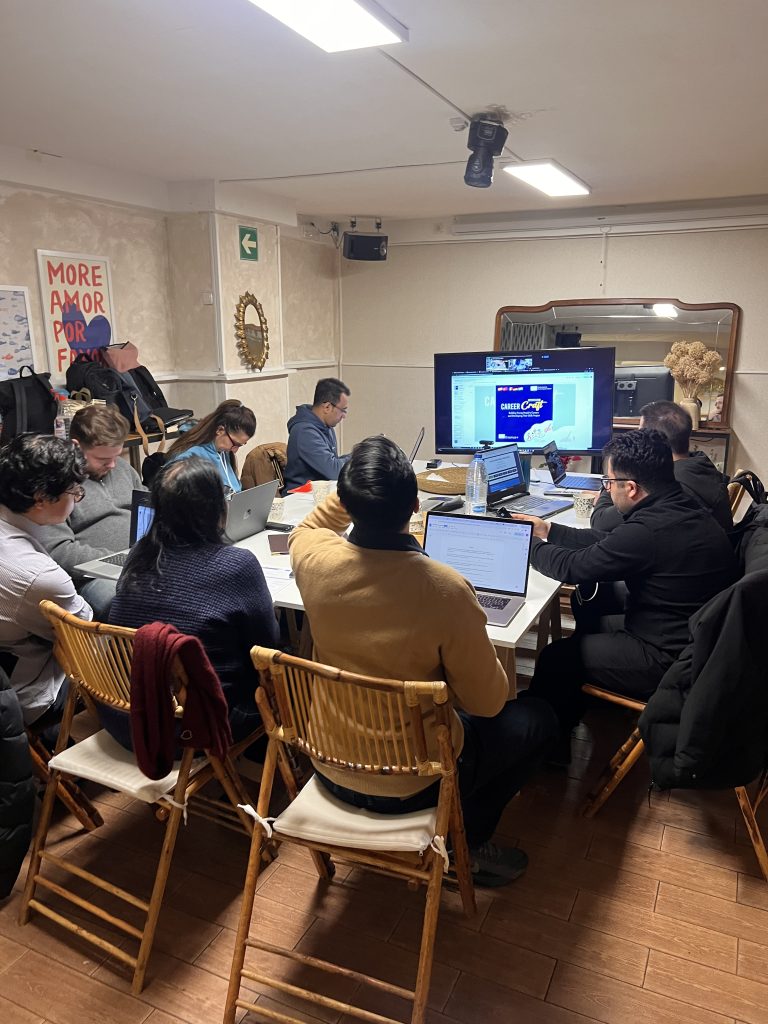
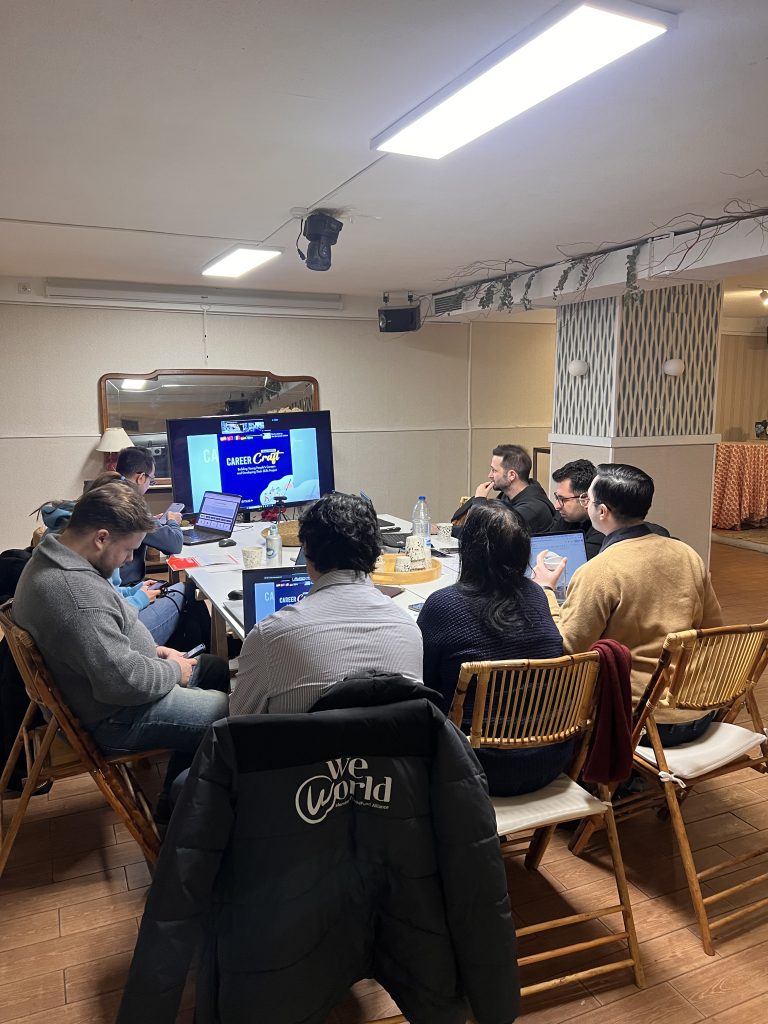
On 24 January 2025, representatives of the project partnership met in Valladolid, Spain, for the official kick-off meeting of project number 2024-3-DE04-KA154-YOU-000271505.
The meeting marked the formal beginning of the partners’ cooperation and provided an important opportunity to discuss the project objectives, planned activities, responsibilities, expected results, communication procedures, and next implementation steps.
Hosted at Bajo El Mismo Cielo Studio, located at Calle del León 4 in the centre of Valladolid, the meeting brought the project partners together in a collaborative environment where they could establish a shared understanding of the project and agree on the practical arrangements required for its successful delivery.
Building a common understanding of the project
The kick-off meeting represented an essential first step in the project’s implementation.
During the meeting, partners reviewed the overall purpose of the project and discussed how the planned activities would contribute to its objectives. Particular attention was given to ensuring that all organisations had a clear understanding of the project structure, expected outcomes, target groups, implementation calendar, and quality requirements.
The discussions helped the partners align their expectations and agree on a common working approach.
The meeting also provided space for each organisation to present its experience, expertise, and potential contribution to the partnership. This supported a better understanding of the strengths available within the consortium and created a strong foundation for cooperation.
Clarifying roles and responsibilities
One of the main objectives of the kick-off meeting was to clarify the responsibilities of each partner.
The participants discussed the distribution of tasks related to:
- project coordination and administration;
- preparation and implementation of activities;
- participant involvement and support;
- communication among partners;
- monitoring and evaluation;
- dissemination and visibility;
- preparation of educational resources;
- documentation and reporting;
- sustainability of the project results.
Clear roles are essential in an international project because they help partners avoid duplication, manage deadlines, and ensure that all planned activities are completed according to the agreed standards.
The meeting allowed the consortium to identify who would lead or contribute to each area of work and how progress would be communicated and monitored.
Planning the project activities
The partners reviewed the general implementation calendar and discussed the preparation of the project’s future activities.
The planning process considered not only the content of the activities but also the practical steps required before, during, and after their implementation.
These steps include participant selection, preparation, learning materials, logistical arrangements, inclusion measures, risk management, documentation, evaluation, and follow-up actions.
The partners agreed that the activities should be participatory, inclusive, accessible, and adapted to the needs of young people.
Non-formal learning methods, teamwork, intercultural dialogue, practical exercises, reflection, and youth-led participation were recognised as important elements of the project methodology.
Communication and partnership cooperation
Effective communication was identified as a central condition for the success of the project.
The partners discussed the communication channels that would be used for regular cooperation, the organisation of online meetings, the exchange of documents, and the procedures for making joint decisions.
A shared approach to communication will allow the consortium to respond quickly to challenges, coordinate activities, and ensure that all organisations remain informed about the project’s progress.
The meeting also emphasised the importance of transparency, mutual support, respect for deadlines, and active participation by all partners.
International cooperation requires flexibility and trust, and the Valladolid meeting offered an opportunity to begin building these qualities from the start of the project.
Quality assurance and evaluation
The partnership also discussed how the quality of the project and its activities would be monitored.
Quality assurance will involve regular communication, participant feedback, partner evaluations, review of educational activities, and continuous monitoring of progress toward the project objectives.
The partners agreed that evaluation should not take place only at the end of the project.
Instead, feedback and reflection should be integrated throughout the implementation process so that methods and activities can be improved when necessary.
This approach will help the partnership identify successful practices, address challenges early, and ensure that the project remains relevant to the needs of its participants and target groups.
Inclusion and meaningful participation
The importance of inclusion was highlighted during the kick-off meeting.
The partners discussed the need to create opportunities for young people from diverse backgrounds and to reduce barriers that may limit participation.
These barriers may be connected to social, economic, educational, geographical, cultural, linguistic, or accessibility-related circumstances.
The project activities will therefore aim to provide a respectful and supportive environment in which participants can contribute, express their ideas, develop competencies, and cooperate with peers from different countries.
Meaningful participation means that young people should not only attend project activities. They should also have opportunities to influence discussions, contribute to outputs, share their experiences, and participate in follow-up actions.
Dissemination and project visibility
Another important topic discussed in Valladolid was the dissemination of project activities and results.
The partners considered how the project would be presented to young people, organisations, educational institutions, stakeholders, and local communities.
Planned dissemination channels may include:
- partner websites;
- social media;
- newsletters;
- articles;
- photographs and videos;
- local presentations;
- workshops;
- information materials;
- educational resources;
- public events.
The partners agreed that dissemination should take place throughout the project rather than only after its completion.
Regular communication will help raise awareness of the project, share learning outcomes, involve wider audiences, and promote the opportunities offered through European cooperation.
The partnership also recognised the importance of respecting the Erasmus+ visibility requirements and correctly acknowledging the support of the European Union in public materials.
Preparing for sustainability
The kick-off meeting also provided an opportunity to discuss the long-term use of the project results.
The partners aim to create outcomes that can continue to support young people, youth workers, educators, and organisations after the formal project period has ended.
Sustainability may be supported by integrating project methods into future activities, sharing resources with other institutions, adapting educational materials to new target groups, and maintaining cooperation among the partner organisations.
The Valladolid meeting encouraged partners to consider sustainability from the beginning of implementation rather than treating it only as a final-stage responsibility.
An opportunity to discover Valladolid
The meeting also allowed the participants to become familiar with Valladolid and its cultural and historical environment.
Located in the autonomous community of Castile and León, Valladolid offered an inspiring setting for the beginning of the partnership.
The city’s historic centre, cultural heritage, public spaces, and welcoming atmosphere contributed to the international character of the meeting.
Participants arriving through Madrid were able to reach Valladolid by high-speed train from Madrid-Chamartín-Clara Campoamor station or by direct bus from Madrid-Barajas Airport.
The meeting venue, Bajo El Mismo Cielo Studio, was centrally located and accessible from the main accommodation and cultural areas of the city.
Strengthening cooperation from the beginning
Beyond administrative and technical planning, the kick-off meeting played an important role in strengthening relationships among the partner organisations.
Face-to-face communication allowed participants to discuss ideas in greater detail, understand different organisational perspectives, and establish a more personal basis for future cooperation.
These relationships are particularly important in European projects, where partners must work across different languages, cultures, educational systems, and organisational realities.
By meeting in Valladolid, the consortium was able to begin developing the trust and shared responsibility needed for effective international teamwork.
A successful beginning
The kick-off meeting concluded with a common commitment to implement the project responsibly, collaboratively, and in accordance with its objectives.
The partners left Valladolid with a clearer understanding of their tasks, the implementation timeline, communication arrangements, quality standards, and expected results.
The meeting represented more than the official launch of the project. It created the practical and relational foundations for the activities that will follow.
Through close cooperation, regular communication, participant-centred methods, and shared responsibility, the partnership will work to ensure that the project generates meaningful learning opportunities and sustainable results.
We thank the host team in Valladolid, the project representatives, and everyone involved in preparing and organising the meeting.
The kick-off meeting on 24 January 2025 marked the beginning of an important European cooperation journey, and the partners look forward to implementing the next stages of the project together.
Event: Project Kick-Off Meeting
Project number: 2024-3-DE04-KA154-YOU-000271505
Date: 24 January 2025
Location: Valladolid, Spain
Meeting venue: Bajo El Mismo Cielo Studio
Address: Calle del León 4, 47003 Valladolid
Funded by the European Union. The views and opinions expressed are, however, those of the authors only and do not necessarily reflect those of the European Union or the granting authority. Neither the European Union nor the granting authority can be held responsible for them.