Project No. 2025-1-PL01-KA122-ADU-000314624
21–29 November 2025 (Activties: 22–28/11/2025) | Iași, Romania
The Erasmus+ KA122-ADU mobility project “Circle of Care: Parenting Special Journeys” brought a vital and timely response to one of Europe’s most urgent social challenges: empowering parents of children with Autism Spectrum Disorder (ASD) and other special needs through accessible training, community support, and innovative digital resources. Held in Iași, Romania, the initiative was dedicated to strengthening families, reducing parental stress, and improving behavioral outcomes through evidence-based methods and international collaboration.
A European Challenge That Required Immediate Support
Across the EU, approximately 87 million people were living with disabilities. Parents of children with ASD often faced elevated emotional, behavioral, and practical challenges. Communication barriers, aggressive behaviors, sensory sensitivities, and daily unpredictability affected family well-being. Although Applied Behavior Analysis (ABA) had been recognized as one of the most effective interventions for ASD, access to qualified training remained limited in many regions, leaving families without consistent support.
To better understand these needs, the “Circle of Care: Parenting Special Journeys” team conducted a survey with 396 parents, revealing that:
✔ 89% struggled with daily fear, stress, and behavioral management challenges.
Parents frequently reported:
High levels of emotional exhaustion
Isolation and lack of peer support
Uncertainty about long-term care
Difficulty managing behaviors at home and school
Limited access to digital tools designed for ASD
These realities highlighted the necessity of specialized training and community-oriented support structures—exactly what the mobility project sought to deliver.
Purpose of the Project: Bringing Training, Knowledge, and Hope
“Circle of Care: Parenting Special Journeys” aimed to bridge the gap between families’ needs and their ability to access effective interventions. By partnering with SKILLHUBE INCLUSIVITY, the project provided a powerful learning experience through:
✔ Expert-led seminars
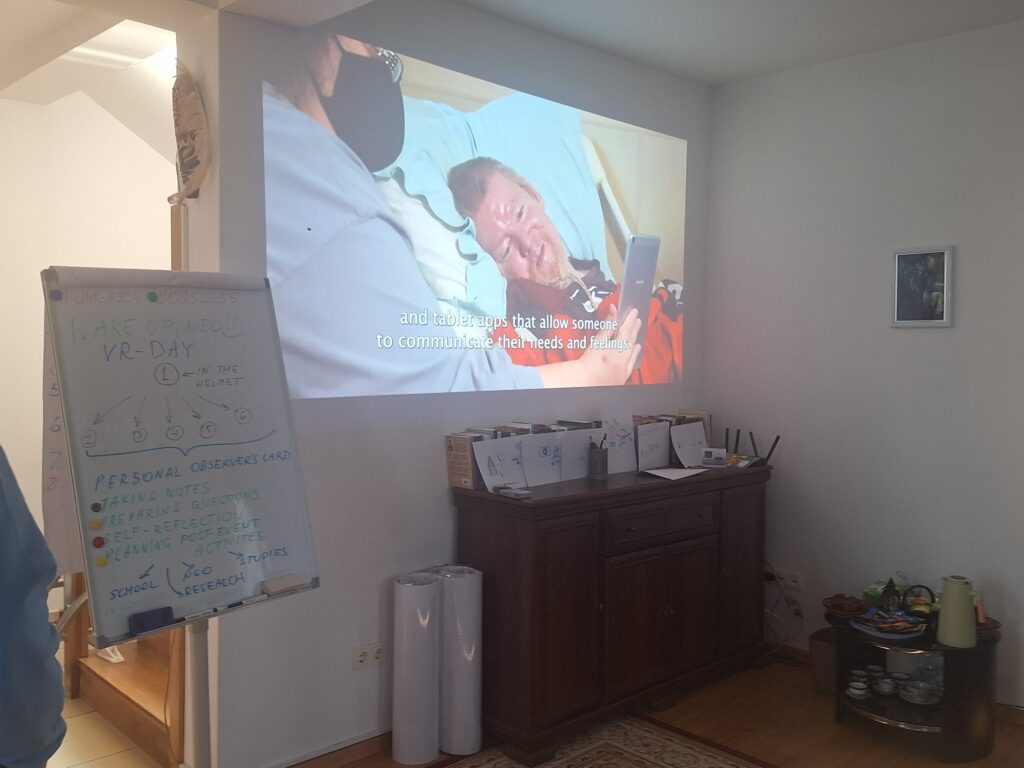
Covering ABA, behavior analysis, emotional regulation, communication strategies, and the use of digital tools.
✔ Practical workshops
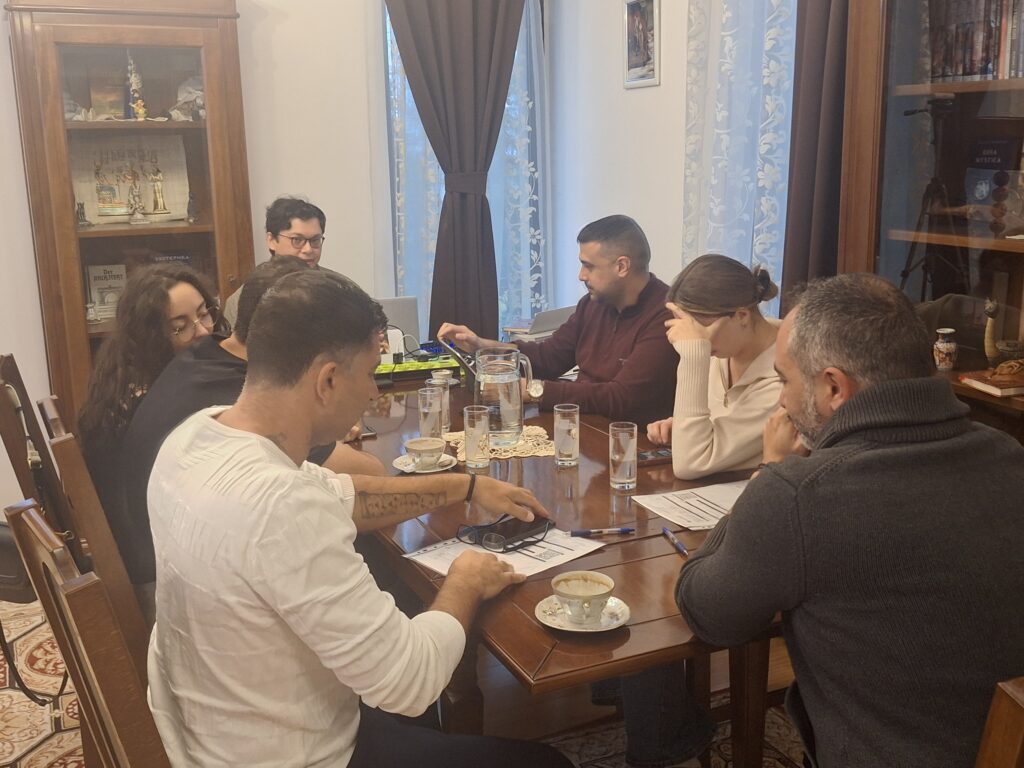
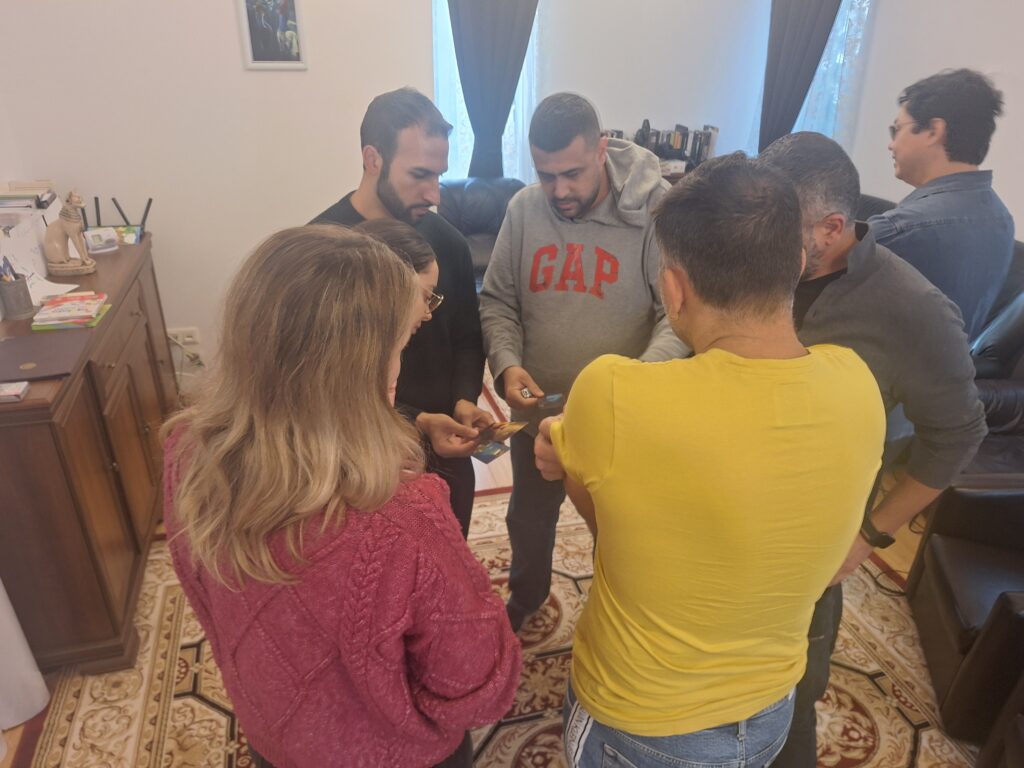
Including simulations, case studies, role-playing, and behavior-management exercises tailored to real family situations.
✔ Peer-to-peer support spaces
Where parents exchanged experiences, found emotional support, and reduced feelings of isolation.
✔ Digital empowerment
Participants gained access to free apps, ICT tools, e-learning systems, and open educational resources (OERs) focused on ASD.
By attending these sessions in Iași, parents strengthened their skills, built resilience, and returned home better equipped to support their children.
Project Objectives
The project defined concrete, realistic objectives to ensure measurable impact on families, organizations, and adult education practitioners:
Improve parents’ behavioral management skills
Through ABA-based techniques, positive reinforcement strategies, and structured communication models.
Reduce parental stress by at least 10%
Using resilience-building strategies and the support networks developed during the mobility.
Increase digital literacy by at least 20%
With a focus on ICT tools for communication, behavior monitoring, visual schedules, and assistive technologies.
Strengthen social, academic, and functional outcomes
Targeting a 20% increase in children’s overall success as parents applied their newly acquired techniques.
Promote innovative practices in adult education
By integrating digital pedagogies, creative methodologies, and community-based learning models.
Build stronger partnerships and knowledge-sharing networks
Among organizations, trainers, families, and communities across Europe.
Evaluation Strategy: Ensuring Long-Term Results
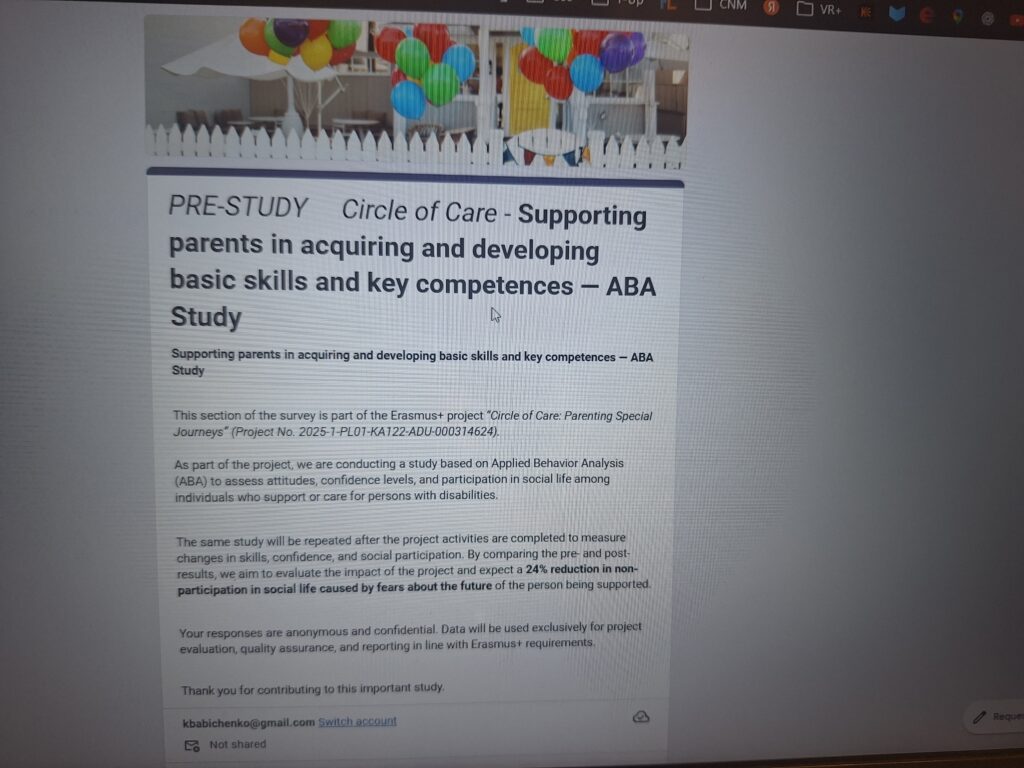
To track progress and impact, the project used a three-phase evaluation model based on the survey “Knowledge in Digital Tools for Children with Autism.”
The assessment was conducted:
Before the mobility (pre-test)
After the mobility (post-test)
One year after the project’s completion
This approach provided:
Short-term insights into learning outcomes
Long-term evidence of retained skills
Data on how digital tools were integrated into daily life
A reliable measure of the project’s sustained impact
Results were processed by the partner institution and included in a comprehensive final report, ensuring transparency, quality, and replicability.
Expected Outcomes and Long-Term Benefits
“Circle of Care: Parenting Special Journeys” was designed to generate meaningful results that would benefit participants and the wider community:
✔ Enhanced parental competence
Through scientifically validated ABA strategies.
✔ Increased digital readiness
Supporting the use of apps, assistive tools, visual schedules, and e-learning platforms.
✔ Stronger international cooperation
Creating a sustainable network for collaboration and knowledge exchange.
✔ Improved family well-being and resilience
As parents gained confidence and children benefited from more structured and supportive environments.
Conclusion: A Circle of Care That Extended Beyond Borders
The “Circle of Care: Parenting Special Journeys” Erasmus+ mobility project served as a crucial intervention for families facing daily challenges related to ASD and disability. By combining expert knowledge, digital innovation, and peer support, the project helped parents transform fear into confidence, isolation into connection, and uncertainty into empowerment.
By taking place in Iași, Romania, the initiative laid the foundation for long-lasting improvements in family resilience, educational pathways, and access to vital resources—ultimately contributing to a more inclusive Europe where every parent felt supported on their unique journey.