Young people from four countries developed digital skills and innovative solutions for social challenges
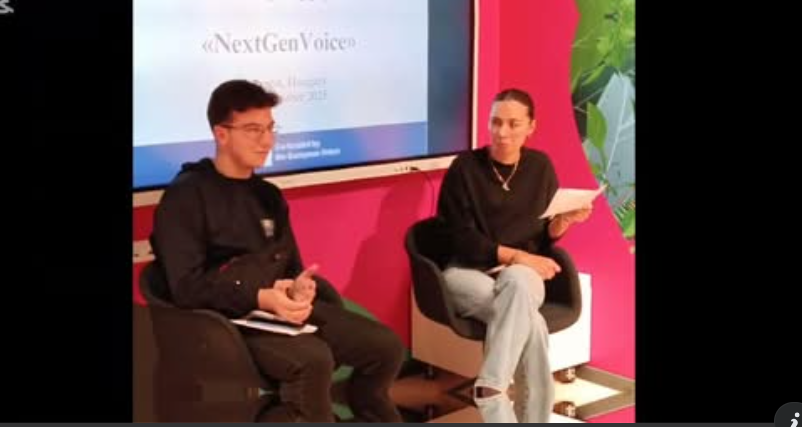
From 7 to 15 October 2025, young participants from Germany, Hungary, Türkiye, and Romania came together in Budapest, Hungary, for the international mobility “Digital Transformation and Innovation.”
The activity was organised within the Erasmus+ project “Fostering Youth Participation and Social Justice – NextGenVoice”, project number 2024-3-DE04-KA154-YOU-000271505.
The mobility brought together representatives and young participants from the project partner organisations:
- Phoenix Knowledge Wings gGmbH, Germany – project coordinator;
- Creative Youth Academy Hungary, Hungary – host organisation;
- ERFEY Bilisim ve Danismanlik, Türkiye;
- SKILLHUB INCLUSIVITY, Romania.
As the Romanian partner, SKILLHUB INCLUSIVITY was pleased to participate in this international learning experience and support young people in developing digital, creative, entrepreneurial, and civic competencies.
Using technology to respond to social challenges
The seven-day educational programme was designed to equip participants with essential digital skills and encourage them to use technology as a tool for innovation, participation, and positive social change.
The workshop did not present digital transformation only as the use of new devices, platforms, or applications. Participants were encouraged to consider how digital tools can help communities address real challenges connected to education, inclusion, environmental sustainability, access to information, employment, youth participation, and community development.
Through practical sessions, teamwork, mentoring, coding activities, and project development, young people explored how digital solutions can respond to social needs and create meaningful impact.
The mobility directly supported the objectives of the NextGenVoice project by improving digital literacy, encouraging innovation, and empowering young people to take an active role in their communities.
Beginning the international learning journey
The first day of the mobility was dedicated to welcoming participants and introducing the programme, objectives, working methods, and expected results.
Icebreakers and team-building exercises helped participants get to know one another and build trust within the international group.
The young people came from different cultural, educational, and social backgrounds and had different levels of experience with digital technology. The opening activities created an inclusive environment in which participants could communicate freely, cooperate, and learn from one another.
Participants were also introduced to the concept of digital transformation and discussed how technology has changed communication, education, employment, business, public participation, and everyday life.
Examples of successful digital projects and start-ups showed how innovation can transform industries and communities.
Exploring digital collaboration tools
The second day focused on digital tools and platforms that can support innovation and teamwork.
Participants were introduced to project-management software, communication platforms, cloud-based collaboration systems, shared documents, and online tools for organising ideas and tasks.
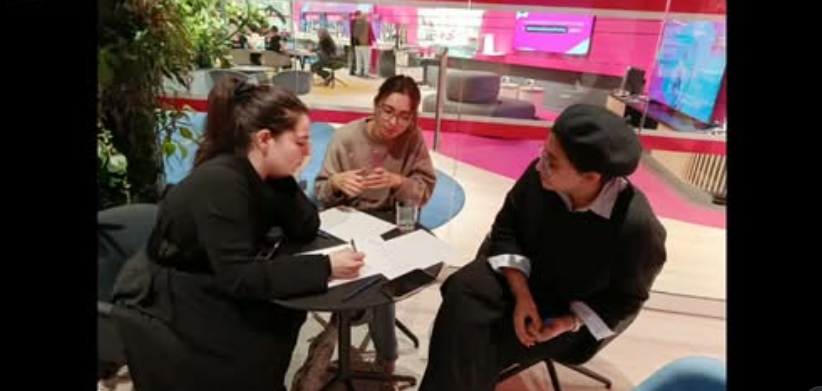
During the practical sessions, international teams tested these tools while working on common project ideas.
The activities showed that digital collaboration is not only about knowing how to use a platform. It also requires clear communication, shared responsibility, planning, respect for different perspectives, and effective teamwork.
Participants learned how digital tools can support international cooperation and make it easier for young people from different locations to develop projects together.
From data to community solutions
Participants also explored how data can support decision-making in community and social projects.
They learned that responsible use of data can help organisations better understand social needs, identify patterns, define target groups, and assess the potential impact of an initiative.
Working in teams, the participants analysed social challenges and developed ideas for data-informed solutions.
The sessions encouraged them to ask important questions:
- What problem are we trying to solve?
- Who is affected by this problem?
- What information do we need?
- How can data help us make a better decision?
- How can we use data responsibly and ethically?
- Who might be excluded from a digital solution?
This process strengthened the participants’ analytical and problem-solving abilities.
Developing coding and digital literacy skills
The third day introduced participants to basic coding through beginner-friendly tools and platforms.
Young people learned fundamental programming concepts and practised them through small projects, simple digital solutions, and automation exercises.
The activities were designed to be accessible to participants with different levels of previous experience.
Those who were new to coding received support from mentors and peers, while more experienced participants were encouraged to share their knowledge and contribute to the work of their teams.
The aim was not to transform every participant into a professional programmer. Instead, the sessions helped young people understand how digital products are created and encouraged them to see coding as a tool for creativity and problem-solving.
Navigating the digital world responsibly
Digital literacy was addressed as more than technical ability.
Participants explored how to find, understand, evaluate, create, and share digital content responsibly.
The programme included discussions and practical activities related to:
- evaluating online information;
- identifying unreliable or misleading content;
- digital safety and privacy;
- cybersecurity basics;
- ethical use of digital tools;
- responsible online communication;
- digital rights and responsibilities;
- accessibility and inclusion;
- the social impact of technology.
Participants reflected on how digital tools can create opportunities while also increasing inequalities when access, affordability, skills, or accessibility are not taken into consideration.
The sessions encouraged young people to become more informed, critical, and responsible digital citizens.
Innovation and creativity in the digital age
The fourth day focused on creative thinking and innovation.
Participants learned techniques for analysing complex problems, generating ideas, comparing alternatives, and transforming an initial concept into a possible digital solution.
In international groups, the young people brainstormed innovations addressing areas such as education, environmental sustainability, youth participation, accessibility, and community development.
They were encouraged to begin with a real need rather than with a particular technology.
This approach helped participants understand that a successful digital solution should be useful, inclusive, realistic, and focused on the people who will use it.
The groups then started developing prototypes with the help of digital design and mock-up tools.
From ideas to prototypes
During the prototyping sessions, participants transformed their ideas into visual and functional concepts.
They created early versions of digital platforms, applications, services, campaigns, or other technology-supported solutions.
The prototypes allowed teams to test their ideas before developing them further.
Mentors provided feedback on the clarity, usefulness, feasibility, accessibility, and potential social impact of each proposal.
The participants were asked to consider:
- Who will use the solution?
- What specific need does it address?
- Is the solution easy to understand?
- Is it accessible to young people with fewer opportunities?
- What resources are needed?
- How could the idea be improved?
- What impact could it have on the community?
This feedback helped teams refine their concepts and strengthen the connection between digital innovation and social responsibility.
Understanding digital entrepreneurship
The fifth day introduced the participants to digital entrepreneurship and business models in the digital economy.
The workshop presented entrepreneurship not only as a way of creating profit, but also as a method of developing sustainable solutions to social and community needs.
Participants explored examples of digital start-ups and examined how innovative ideas can be transformed into services, products, or initiatives.
The case studies helped them understand the importance of:
- identifying a real problem;
- understanding users and target groups;
- developing a clear value proposition;
- planning resources and activities;
- communicating an idea effectively;
- considering financial and organisational sustainability;
- measuring social impact.
Each team then worked on a business or sustainability plan for its digital innovation project.
Preparing sustainable digital projects
While developing their plans, participants considered how their ideas could continue after the workshop.
They discussed possible partnerships, funding opportunities, human resources, communication channels, target audiences, and implementation steps.
The young people also examined the risks that might affect their projects and considered how those risks could be reduced.
This process enabled participants to move beyond general ideas and begin planning realistic digital initiatives.
Teams then started preparing presentations and pitches for their final project concepts.
Finalising projects and improving presentation skills
The sixth day was dedicated to completing the digital innovation projects and preparing the final presentations.
The groups integrated the feedback received during previous sessions and refined their prototypes, plans, messages, and expected results.
Pitch-coaching sessions helped participants communicate their ideas clearly and convincingly.
The young people learned how to structure a presentation by explaining:
- the problem they had identified;
- the people affected by the problem;
- their proposed digital solution;
- how the solution would work;
- what made it innovative;
- how it promoted inclusion or social change;
- what resources would be required;
- how the initiative could become sustainable.
Participants also practised public speaking, storytelling, teamwork, time management, and responding to questions.
Presenting digital innovations
During the final project presentations, each group presented its digital innovation to mentors and peers.
The presentations demonstrated the participants’ progress throughout the mobility.
They showed not only improved digital knowledge, but also stronger creativity, teamwork, problem-solving, leadership, and communication skills.
Mentors and participants provided constructive feedback, recognising the strengths of each idea and suggesting possible improvements.
The feedback process was designed as a learning opportunity rather than a competition. Participants were encouraged to support one another and recognise that innovative projects often improve through testing, discussion, and revision.
Non-formal education in practice
The mobility was based mainly on non-formal and informal learning methods.
Participants learned through:
- interactive workshops;
- practical digital tasks;
- teamwork;
- group discussions;
- case studies;
- brainstorming;
- coding exercises;
- simulations;
- peer learning;
- prototype development;
- mentoring;
- project presentations;
- reflection and evaluation.
These methods placed young people at the centre of the learning process.
Participants were not passive recipients of information. They created ideas, tested tools, solved problems, exchanged knowledge, made decisions, and presented their own project concepts.
The international environment also supported informal learning through daily communication, intercultural exchange, social interaction, and shared experiences.
Reflection and evaluation
On the final day, participants reflected on the knowledge and competencies they had developed.
They discussed how their understanding of digital transformation had changed and how they could apply their new skills in their organisations, studies, professional lives, and communities.
The reflection activities also allowed young people to identify personal progress in areas such as:
- digital confidence;
- coding;
- online collaboration;
- critical thinking;
- creativity;
- project planning;
- teamwork;
- intercultural communication;
- public speaking;
- civic responsibility.
Participants evaluated the programme and shared recommendations for future activities.
Their feedback contributed to the improvement of the project’s educational methods and future dissemination activities.
Recognition and closing ceremony
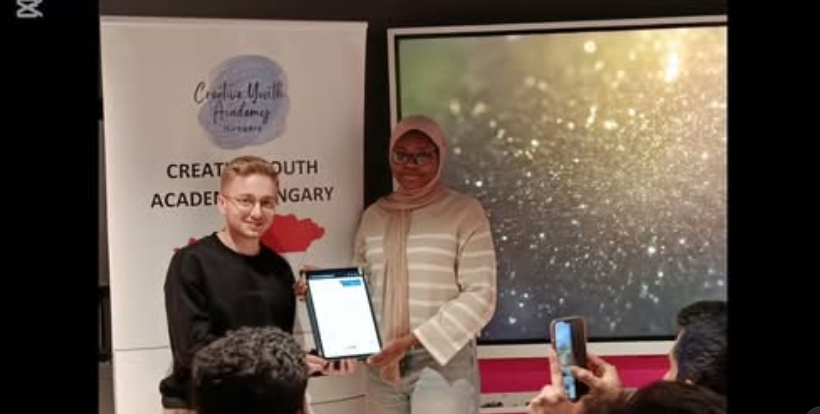
At the end of the mobility, participants received certificates recognising their involvement and learning achievements.
The closing ceremony celebrated the work completed by the international teams and the friendships and partnerships developed during the programme.
Facilitators and organisers encouraged the young people to continue developing their ideas and to use digital innovation as a tool for community engagement and social change.
The certificates represented not only the completion of the workshop but also the beginning of a new stage in which participants could apply and share what they had learned.
Benefits for Romanian participants
For the Romanian participants representing SKILLHUB INCLUSIVITY, the mobility provided an opportunity to develop important digital and transversal competencies.
They gained practical experience in using collaboration platforms, analysing information, coding, developing prototypes, planning digital projects, and presenting innovative ideas.
They also improved their English communication, intercultural cooperation, initiative, adaptability, teamwork, and confidence.
An especially important aspect was the connection between digital transformation and inclusion.
Participants considered how technology can support people with disabilities and young people with fewer opportunities, but also how poorly designed digital services can create new barriers.
This perspective is closely connected to the mission of SKILLHUB INCLUSIVITY and will support our future educational and community activities.
Digital transformation as a tool for participation
The Budapest workshop demonstrated that digital transformation can strengthen youth participation when it is connected to real needs and social values.
Technology can help young people communicate, organise campaigns, collect information, develop community solutions, build networks, and make their voices heard.
At the same time, participants learned that technology alone cannot solve social problems.
Successful digital innovation also requires empathy, cooperation, ethical responsibility, accessibility, critical thinking, and a clear understanding of the people and communities involved.
The workshop therefore combined technical learning with active citizenship and social responsibility.
European cooperation and intercultural learning
The mobility provided a valuable space for cooperation among young people from Germany, Hungary, Türkiye, and Romania.
Participants exchanged experiences about digital education, social challenges, youth participation, and opportunities available in their countries.
The multicultural teams allowed them to compare perspectives and develop solutions that took different realities into consideration.
The international learning environment promoted respect, solidarity, openness, and appreciation of diversity.
Participants built friendships and professional connections that can support future European cooperation and youth-led initiatives.
Continuing the impact after the mobility
After returning to their home countries, participants are encouraged to share their experiences and newly acquired knowledge with peers, volunteers, schools, NGOs, youth workers, and local communities.
The digital tools, methods, project ideas, and prototypes developed in Budapest can be used as starting points for future activities.
Participants can organise presentations, digital-literacy workshops, peer-learning sessions, awareness campaigns, or community initiatives.
Through these follow-up actions, the benefits of the mobility can reach young people who did not participate directly in the international programme.
A meaningful stage of the NextGenVoice project
The Digital Transformation and Innovation Workshop in Budapest represented an important stage of the NextGenVoice project.
It enabled young people to explore how digital skills, creativity, and innovation can contribute to community development and positive social change.
The mobility also reinforced the main message of the project: young people should be supported not only in adapting to changes in society, but also in actively shaping those changes.
By giving participants practical tools, mentorship, international experience, and space to develop their own ideas, the workshop helped prepare them to become more confident and responsible digital citizens.
SKILLHUB INCLUSIVITY thanks the host organisation, project coordinator, partner organisations, mentors, facilitators, and all participants who contributed to this successful learning experience.
Project title: Fostering Youth Participation and Social Justice – NextGenVoice
Activity: Workshop 2 – Digital Transformation and Innovation
Project number: 2024-3-DE04-KA154-YOU-000271505
Mobility period: 7–15 October 2025
Location: Budapest, Hungary
Host organisation: Creative Youth Academy Hungary
Project coordinator: Phoenix Knowledge Wings gGmbH
Romanian partner: SKILLHUB INCLUSIVITY
Participating countries: Germany, Hungary, Türkiye, and Romania
Funded by the European Union. The views and opinions expressed are, however, those of the authors only and do not necessarily reflect those of the European Union or the granting authority. Neither the European Union nor the granting authority can be held responsible for them.